Our Serbs is an organization created to help those in need, celebrating 10th year
since foundation. The Serbian people have been oppressed and are desperate to
find ways to support their families, and here is the Our Serbs to create a support
system to provide sustainable ways of living.

What inspired you to found the “Our Serbs” organization?
I was born in Serbia (former Yugoslavia) and came to the US when I was 12 years old. I never went back,
even for a visit. Then some twenty and so years ago I started visiting Serbia and after a few trips realized that
many Serbian people in Serbia and Kosovo and Metohija have a very hard life and need help.
The idea took hold and I endeavored to make it a reality. And what better name than Our Serbs?
What was the main goal and vision you had for the organization during its inception?
I realized that Serbian people did not want a handout. What they really wanted was assistance in getting
independent, in being enabled to do what they can: till the land (if they had some), raise chickens, livestock,
grow a crop or open a shop where they can work on that which they know how. In short, they needed help in
becoming self-sufficient.
How do you build the team to help grow the mission of the organization? Who are the people that are
the members of your team?
Well, that was the hardest thing to accomplish. Our board (team) consists of members who have been born
and raised in Serbia and certainly understand the needs there; also of some younger members who were born in
the USA with Serbian roots and connections, who have taken the time and made an effort to visit Serbia with me
and saw the need with their own eyes. Those are our board members today.
In the first 10 years of ‘Our Serbs’, which project do you find the most important?
I wish I could answer that but all our projects are very important especially to the recipients. From smallest to
the largest, from providing baby formula, food to feed family for a month, load of wood for heat in winter, to
building transition housing for orphans who have reached adulthood and must leave orphanages.
Each small step is important on that road to helping those in need to survive till the next day, to make it.
There are no small or large projects; they are all equally important in providing those in need with sustenance
and survival.
How does the organization prioritize help to those in need and what role does the SPC play in that
process?
SPC is of great help to us. They provide assistance and guidance. We work with the priests from different
parts of Serbia and Kosovo and Metohija to guide us to the neediest families and most affected communities so
that our assistance can be of greatest value. We cannot always help with it all but we do as much as we can. We
provide the most needed necessities for them to survive the harshest times.
What is the most difficult aspect of work in a humanitarian organization?
Besides raising donations getting the people who are willing to give of their time, to volunteer. And that is the
greatest gift. We all have families and jobs, with our own needs and obligations. In today’s world giving of one’s
time is a great commodity. It takes a lot of work and good will to do this job but the rewards are immeasurable.
What motivates you to continue the vision and mission of ‘Our Serbs’?
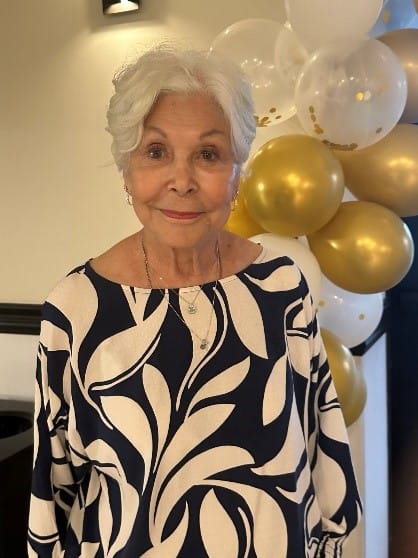
At the end of the year, when I am tired and I say to myself: ‘why am I still doing this at my age? After all I am
83 years old.’ But then I remember my childhood and I remember the faces of the children; that look on their
faces, of their mother and father when they can feed them or clothe them, or fix their home.
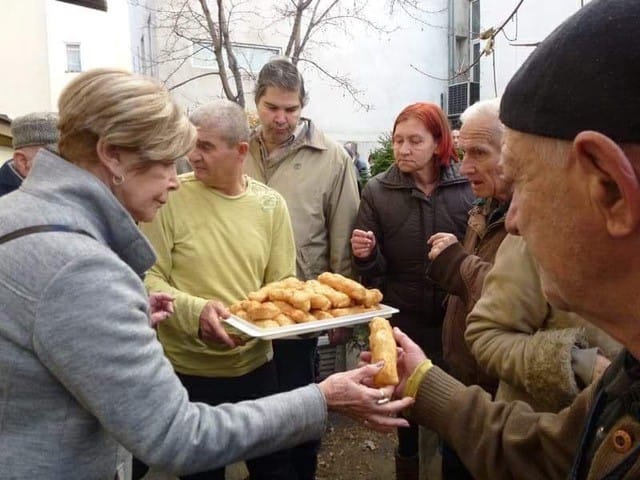
Those faces are etched in my memory. We feed about 2,000 people at Christmas time at VDS (Versko
Drustvo Staratelja, Belgrade) and with our Patriarch we give out over 1,000 gifts to impoverished children at St.
Sava Cathedral. We support the soup kitchen in Belgrade and send over 2,000 Christmas gifts to children in
Kosovo and Metohija. And we do more at Easter and throughout the year. That is what I remember and I will
keep doing it until I can’t any longer.
What did you learn about yourself through humanitarian work?
I have learned over and over how thankful I am to God that I had an opportunity to do this for our people.
Born in Belgrade and experiencing poverty with all its cruelty, when I visit our people in need that I can help I
say: ‘Thank you Lord, for I was one of them.”
What is your message to those who are interested in supporting and working with ‘Our Serbs’?
My message to you is: You won’t believe how wonderful you will feel when you see what Our Serbs have
done and how much more we can do with your help.
Nina STOJKOVIC